
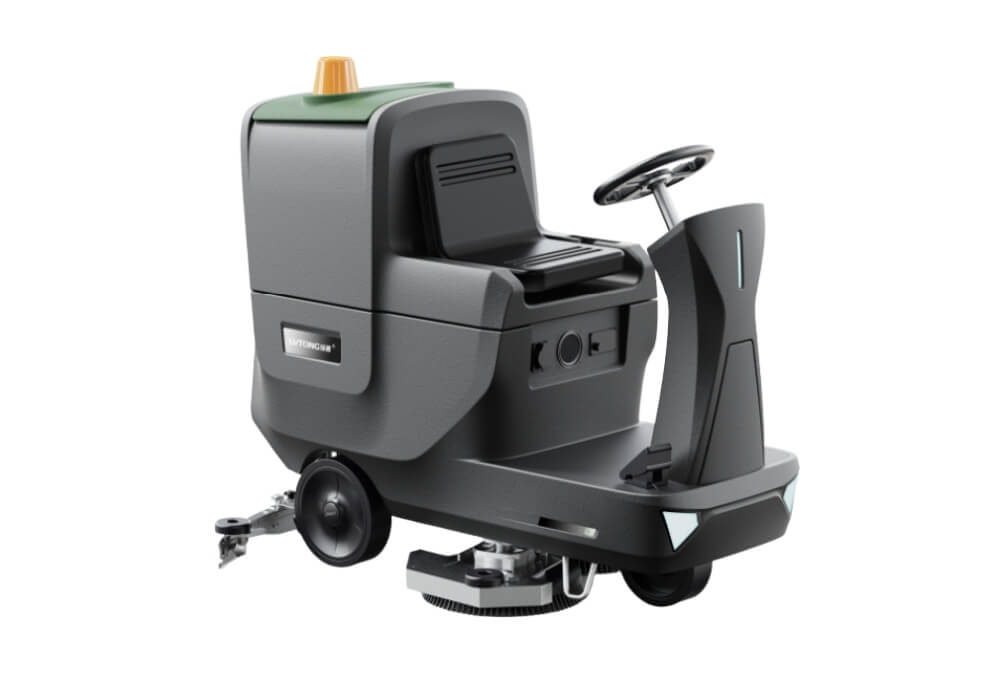
 Intelligent operation and convenient maintenance are the key strategies that determine long-term performance. The washing machine integrated with Internet of Things (iot) functions can monitor 12 parameters in real time, including brush load, battery voltage and clear water flow rate (typical value is 10 liters per minute), and provide 80% early warning of failure risks through predictive maintenance. According to a survey on chain supermarkets, after using washing machines equipped with automated path planning (AGV) technology, manual intervention was reduced by 50%, while cleaning efficiency increased by 40%. Moreover, the battery life remained stable at 6 hours, which is sufficient to cover an operation area of 15,000 square meters. This intelligent solution not only optimizes resources but also reduces the cleaning cost per square meter by 0.3 yuan, and a clear positive financial return can be seen within three years.
Ultimately, to measure the long-term value of the best tile floor scrubber for commercial use, it is necessary to examine its overall cost and sustainability. A high-performance model priced between 40,000 and 80,000 yuan, although its initial budget is 30% higher than that of the basic model, can have an average daily operation and maintenance cost as low as 15 yuan, which is far lower than the average daily cost of 40 yuan for low-end models. Market feedback data shows that for some commercial series of well-known brands such as Karcher, the median service life of the equipment has reached 7 years, and the second-hand residual value rate can still remain at 25% of the original price. For instance, a batch of washing machines purchased by a certain international airport in 2018, after experiencing an average of over 8 hours of high-intensity operation per day, had a performance degradation rate of only 15% by 2023, far below the industry average degradation standard of 35%. This proves that investing in reliable platforms and technologies that have been verified by the market for a decade is not only a procurement decision but also a strategic deployment to ensure the long-term cleanliness, safety and profitability of commercial premises.
Intelligent operation and convenient maintenance are the key strategies that determine long-term performance. The washing machine integrated with Internet of Things (iot) functions can monitor 12 parameters in real time, including brush load, battery voltage and clear water flow rate (typical value is 10 liters per minute), and provide 80% early warning of failure risks through predictive maintenance. According to a survey on chain supermarkets, after using washing machines equipped with automated path planning (AGV) technology, manual intervention was reduced by 50%, while cleaning efficiency increased by 40%. Moreover, the battery life remained stable at 6 hours, which is sufficient to cover an operation area of 15,000 square meters. This intelligent solution not only optimizes resources but also reduces the cleaning cost per square meter by 0.3 yuan, and a clear positive financial return can be seen within three years.
Ultimately, to measure the long-term value of the best tile floor scrubber for commercial use, it is necessary to examine its overall cost and sustainability. A high-performance model priced between 40,000 and 80,000 yuan, although its initial budget is 30% higher than that of the basic model, can have an average daily operation and maintenance cost as low as 15 yuan, which is far lower than the average daily cost of 40 yuan for low-end models. Market feedback data shows that for some commercial series of well-known brands such as Karcher, the median service life of the equipment has reached 7 years, and the second-hand residual value rate can still remain at 25% of the original price. For instance, a batch of washing machines purchased by a certain international airport in 2018, after experiencing an average of over 8 hours of high-intensity operation per day, had a performance degradation rate of only 15% by 2023, far below the industry average degradation standard of 35%. This proves that investing in reliable platforms and technologies that have been verified by the market for a decade is not only a procurement decision but also a strategic deployment to ensure the long-term cleanliness, safety and profitability of commercial premises.
Best tile floor scrubber for commercial use: Which machines perform best long-term?
In the field of commercial cleaning, when choosing a tile floor scrubber with outstanding long-term performance, the core lies in evaluating the total cost of ownership and overall benefits over a service life of more than 5 or even 10 years. Industry analysis shows that the initial investment only accounts for 30% of the total life cycle cost of the equipment, while maintenance, energy consumption and labor costs account for as high as 70%. Therefore, the best tile floor washing machine truly suitable for commercial use must prioritize durability. For instance, a model with a reinforced polyethylene body has an impact resistance three times that of ordinary ABS plastic and can reduce the rate of accidental damage by 40%. According to the 2022 report of the International Sanitation and Cleaning Association (ISSA), leading brands such as Tennant's electric scrubbers can achieve an average mean time between failures (MTBF) of over 2,000 hours when operating at a high frequency of 4 hours per day. This means that unplanned downtime has been reduced by 60% within a five-year period. It directly enhances operational efficiency and ensures a return on investment.
From the perspective of technical parameters, machines that perform well over the long term rely on precise engineering design and power systems. Take brush plate motors as an example. Brushless motors with a continuous power of over 1.5 horsepower not only offer a stable rotational speed of 300 revolutions per minute, ensuring a 90% cleaning rate in the deep joints of tiles, but also reduce energy consumption by 15%. The material of key components such as the squeegee is of vital importance. The squeegee made of polyurethane and silicon carbide composite material has a wear life four times that of ordinary rubber and does not need to be replaced until it takes up to 500 hours. For instance, in the application case of large shopping malls, a model equipped with a dual brush disc system and adjustable brush pressure (ranging from 20 to 70 kilograms) can clean up to 5 square meters per minute, while keeping the probability of glaze wear on the tile surface below 0.05%, perfectly balancing the dual demands of cleaning efficiency and asset protection.
Intelligent operation and convenient maintenance are the key strategies that determine long-term performance. The washing machine integrated with Internet of Things (iot) functions can monitor 12 parameters in real time, including brush load, battery voltage and clear water flow rate (typical value is 10 liters per minute), and provide 80% early warning of failure risks through predictive maintenance. According to a survey on chain supermarkets, after using washing machines equipped with automated path planning (AGV) technology, manual intervention was reduced by 50%, while cleaning efficiency increased by 40%. Moreover, the battery life remained stable at 6 hours, which is sufficient to cover an operation area of 15,000 square meters. This intelligent solution not only optimizes resources but also reduces the cleaning cost per square meter by 0.3 yuan, and a clear positive financial return can be seen within three years.
Ultimately, to measure the long-term value of the best tile floor scrubber for commercial use, it is necessary to examine its overall cost and sustainability. A high-performance model priced between 40,000 and 80,000 yuan, although its initial budget is 30% higher than that of the basic model, can have an average daily operation and maintenance cost as low as 15 yuan, which is far lower than the average daily cost of 40 yuan for low-end models. Market feedback data shows that for some commercial series of well-known brands such as Karcher, the median service life of the equipment has reached 7 years, and the second-hand residual value rate can still remain at 25% of the original price. For instance, a batch of washing machines purchased by a certain international airport in 2018, after experiencing an average of over 8 hours of high-intensity operation per day, had a performance degradation rate of only 15% by 2023, far below the industry average degradation standard of 35%. This proves that investing in reliable platforms and technologies that have been verified by the market for a decade is not only a procurement decision but also a strategic deployment to ensure the long-term cleanliness, safety and profitability of commercial premises.
Intelligent operation and convenient maintenance are the key strategies that determine long-term performance. The washing machine integrated with Internet of Things (iot) functions can monitor 12 parameters in real time, including brush load, battery voltage and clear water flow rate (typical value is 10 liters per minute), and provide 80% early warning of failure risks through predictive maintenance. According to a survey on chain supermarkets, after using washing machines equipped with automated path planning (AGV) technology, manual intervention was reduced by 50%, while cleaning efficiency increased by 40%. Moreover, the battery life remained stable at 6 hours, which is sufficient to cover an operation area of 15,000 square meters. This intelligent solution not only optimizes resources but also reduces the cleaning cost per square meter by 0.3 yuan, and a clear positive financial return can be seen within three years.
Ultimately, to measure the long-term value of the best tile floor scrubber for commercial use, it is necessary to examine its overall cost and sustainability. A high-performance model priced between 40,000 and 80,000 yuan, although its initial budget is 30% higher than that of the basic model, can have an average daily operation and maintenance cost as low as 15 yuan, which is far lower than the average daily cost of 40 yuan for low-end models. Market feedback data shows that for some commercial series of well-known brands such as Karcher, the median service life of the equipment has reached 7 years, and the second-hand residual value rate can still remain at 25% of the original price. For instance, a batch of washing machines purchased by a certain international airport in 2018, after experiencing an average of over 8 hours of high-intensity operation per day, had a performance degradation rate of only 15% by 2023, far below the industry average degradation standard of 35%. This proves that investing in reliable platforms and technologies that have been verified by the market for a decade is not only a procurement decision but also a strategic deployment to ensure the long-term cleanliness, safety and profitability of commercial premises.