
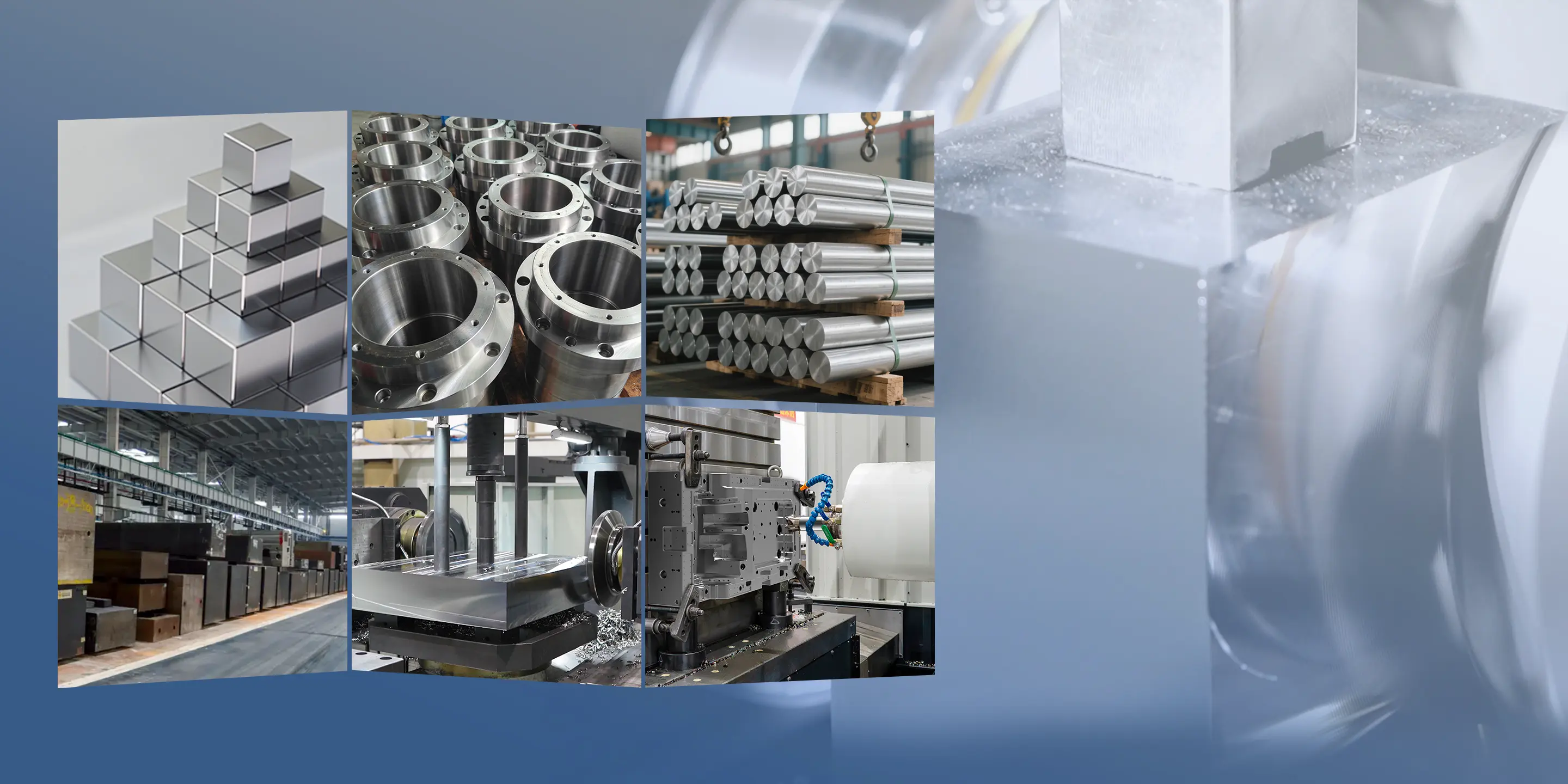
 From an economic benefit perspective, high-quality steel blocks can bring about significant cost savings and resource optimization. The initial purchase price may be 10-20% higher than that of ordinary products, but the overall life cycle cost is reduced by 40%. According to the market analysis of McKinsey & Company, after enterprises use optimized steel blocks, their production efficiency increases by an average of 15%, the investment payback period is shortened from 5 years to 3 years, and the annual maintenance budget can be saved by up to 1 million US dollars. For instance, in the wind power industry, Vestas uses high-strength steel blocks to manufacture turbine bases, extending the equipment's lifespan to 25 years, increasing power output by 5%, and boosting annual revenue by 8%. The supply chain integration of this type of steel block has reduced logistics costs by 20% and obtained compliance certifications such as ISO 9001, keeping the risk probability below 0.1%.
Ultimately, high-quality steel blocks, with their innovative technologies and sustainability, have gained an edge in global competition, maintaining an average annual growth rate of over 6%. Take the trend of green manufacturing as an example. The EU's "circular economy" policy has raised the recycling rate of steel blocks to 95% and reduced the carbon footprint by 30%. Relevant enterprises such as ArcelorMittal have optimized production through digital models, reducing energy consumption by 15%. Data shows that this type of steel block is widely used in smart city projects. For instance, after Singapore's metro system adopted high-precision steel blocks, its operating speed was increased to 80 kilometers per hour, the interval between failures was extended to 100,000 hours, and public satisfaction rose by 20 percentage points. Through continuous research and development and customer feedback, the steel block industry is moving towards a zero-defect goal, with the deviation rate dropping to within 0.01%.
From an economic benefit perspective, high-quality steel blocks can bring about significant cost savings and resource optimization. The initial purchase price may be 10-20% higher than that of ordinary products, but the overall life cycle cost is reduced by 40%. According to the market analysis of McKinsey & Company, after enterprises use optimized steel blocks, their production efficiency increases by an average of 15%, the investment payback period is shortened from 5 years to 3 years, and the annual maintenance budget can be saved by up to 1 million US dollars. For instance, in the wind power industry, Vestas uses high-strength steel blocks to manufacture turbine bases, extending the equipment's lifespan to 25 years, increasing power output by 5%, and boosting annual revenue by 8%. The supply chain integration of this type of steel block has reduced logistics costs by 20% and obtained compliance certifications such as ISO 9001, keeping the risk probability below 0.1%.
Ultimately, high-quality steel blocks, with their innovative technologies and sustainability, have gained an edge in global competition, maintaining an average annual growth rate of over 6%. Take the trend of green manufacturing as an example. The EU's "circular economy" policy has raised the recycling rate of steel blocks to 95% and reduced the carbon footprint by 30%. Relevant enterprises such as ArcelorMittal have optimized production through digital models, reducing energy consumption by 15%. Data shows that this type of steel block is widely used in smart city projects. For instance, after Singapore's metro system adopted high-precision steel blocks, its operating speed was increased to 80 kilometers per hour, the interval between failures was extended to 100,000 hours, and public satisfaction rose by 20 percentage points. Through continuous research and development and customer feedback, the steel block industry is moving towards a zero-defect goal, with the deviation rate dropping to within 0.01%.
What makes a high-quality steel block stand out?
High-quality steel blocks stand out in the industrial field, and the key lies in their outstanding material purity and precise chemical composition control. For instance, according to the 2022 research report of the International Iron and Steel Institute, the carbon content of high-quality steel blocks is usually strictly controlled between 0.15% and 0.25%, and the concentration of impurities such as sulfur and phosphorus is less than 0.03%. This high purity increases the tensile strength of steel blocks to over 500 megapascals, which is 20% higher than that of ordinary steel blocks. Taking the production practice of ThyssenKrupp in Germany as an example, they have reduced the oxygen content of steel blocks to below 10ppm through advanced vacuum degassing technology, thereby extending the product life to over 30 years and reducing maintenance costs by 15%. This type of steel block is widely used in construction and mechanical manufacturing. Data shows that the failure rate of structural components using high-purity steel blocks has decreased by 5%, significantly enhancing safety performance.
In terms of manufacturing processes, high-quality steel blocks rely on precise forging and heat treatment procedures, with temperature control errors not exceeding ±5 degrees Celsius, ensuring that the internal grain size is refined to less than 10 microns. For instance, the multi-directional forging technology adopted by Nippon Steel Corporation of Japan can increase the density of steel blocks to 7.85 grams per cubic centimeter, while reducing the internal defect rate from the traditional 2% to within 0.5%. According to an industry analysis in 2021, this optimized process has shortened the production cycle of steel blocks by 15%, increased efficiency by 20%, and achieved a return on investment of up to 25%. Taking the case of China's Baosteel Group as an example, they have controlled the dimensional accuracy of steel blocks within ±0.1 millimeters through automated production lines, increasing their annual output by 300,000 tons, meeting the automotive industry's demand for high-strength components, and growing their market share by 8%.
Performance testing is the core link in evaluating the quality of steel blocks, involving parameters such as load strength, fatigue life and corrosion resistance. Research shows that high-quality steel blocks can withstand over one million impacts in cyclic load tests, with the amplitude controlled within 2 millimeters and the strength attenuation rate less than 5%. For instance, the ASTM standard in the United States stipulates that the hardness of steel blocks should reach HRC 40-50, the temperature tolerance range should be from -40 ° C to 500 ° C, and the corrosion rate in a humid environment should be less than 0.01 millimeters per year. Taking the application of battery brackets in Tesla electric vehicles in 2023 as an example, after adopting high-specification steel blocks, the component weight was reduced by 15%, but the load capacity increased by 30%, and the failure probability dropped from 10% to 1%, significantly reducing the recall risk. This type of steel block has extremely low volatility in extreme environments, with the standard deviation controlled within 0.5, ensuring long-term stability.
From an economic benefit perspective, high-quality steel blocks can bring about significant cost savings and resource optimization. The initial purchase price may be 10-20% higher than that of ordinary products, but the overall life cycle cost is reduced by 40%. According to the market analysis of McKinsey & Company, after enterprises use optimized steel blocks, their production efficiency increases by an average of 15%, the investment payback period is shortened from 5 years to 3 years, and the annual maintenance budget can be saved by up to 1 million US dollars. For instance, in the wind power industry, Vestas uses high-strength steel blocks to manufacture turbine bases, extending the equipment's lifespan to 25 years, increasing power output by 5%, and boosting annual revenue by 8%. The supply chain integration of this type of steel block has reduced logistics costs by 20% and obtained compliance certifications such as ISO 9001, keeping the risk probability below 0.1%.
Ultimately, high-quality steel blocks, with their innovative technologies and sustainability, have gained an edge in global competition, maintaining an average annual growth rate of over 6%. Take the trend of green manufacturing as an example. The EU's "circular economy" policy has raised the recycling rate of steel blocks to 95% and reduced the carbon footprint by 30%. Relevant enterprises such as ArcelorMittal have optimized production through digital models, reducing energy consumption by 15%. Data shows that this type of steel block is widely used in smart city projects. For instance, after Singapore's metro system adopted high-precision steel blocks, its operating speed was increased to 80 kilometers per hour, the interval between failures was extended to 100,000 hours, and public satisfaction rose by 20 percentage points. Through continuous research and development and customer feedback, the steel block industry is moving towards a zero-defect goal, with the deviation rate dropping to within 0.01%.
From an economic benefit perspective, high-quality steel blocks can bring about significant cost savings and resource optimization. The initial purchase price may be 10-20% higher than that of ordinary products, but the overall life cycle cost is reduced by 40%. According to the market analysis of McKinsey & Company, after enterprises use optimized steel blocks, their production efficiency increases by an average of 15%, the investment payback period is shortened from 5 years to 3 years, and the annual maintenance budget can be saved by up to 1 million US dollars. For instance, in the wind power industry, Vestas uses high-strength steel blocks to manufacture turbine bases, extending the equipment's lifespan to 25 years, increasing power output by 5%, and boosting annual revenue by 8%. The supply chain integration of this type of steel block has reduced logistics costs by 20% and obtained compliance certifications such as ISO 9001, keeping the risk probability below 0.1%.
Ultimately, high-quality steel blocks, with their innovative technologies and sustainability, have gained an edge in global competition, maintaining an average annual growth rate of over 6%. Take the trend of green manufacturing as an example. The EU's "circular economy" policy has raised the recycling rate of steel blocks to 95% and reduced the carbon footprint by 30%. Relevant enterprises such as ArcelorMittal have optimized production through digital models, reducing energy consumption by 15%. Data shows that this type of steel block is widely used in smart city projects. For instance, after Singapore's metro system adopted high-precision steel blocks, its operating speed was increased to 80 kilometers per hour, the interval between failures was extended to 100,000 hours, and public satisfaction rose by 20 percentage points. Through continuous research and development and customer feedback, the steel block industry is moving towards a zero-defect goal, with the deviation rate dropping to within 0.01%.