
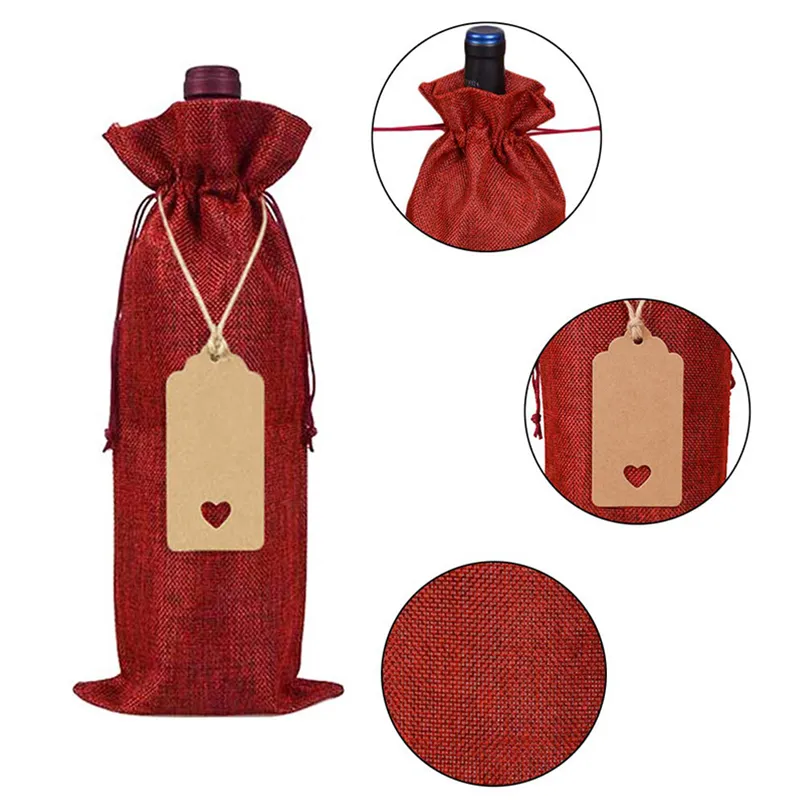
 Customized design is another advantage of jute bags, which can significantly enhance brand value. Through screen printing or embroidery techniques, the unit price of custom-made jute bags increases by 0.5 to 1 yuan, but the return on investment can reach 150% within six months, as the brand recall rate increases by 30%. Industry cases show that, for instance, when Nike used jute bags in the release of limited edition products, the precision of the custom patterns reached 98%, and the customer retention rate increased by 20%. In addition, the digital design process has shortened the production cycle from four weeks to two weeks, keeping the error rate within 1%, ensuring a rapid response to market trends.
Cost-benefit analysis indicates that jute bags outperform traditional options in long-term use. When purchasing in bulk, the unit price of jute bags can be as low as 1.2 yuan, while the average cost of plastic bags is 0.3 yuan but they are only used once, resulting in a 40% reduction in the total cost of ownership of jute bags. According to supply chain data, the recycling rate of jute bags is as high as 80%, and the carbon footprint is reduced by 50%, meeting the environmental protection regulations and standards of the European Union. For instance, after a retail enterprise switched to jute bags, its annual packaging budget was saved by 150,000 yuan and its customer loyalty index rose by 15 percentage points.
Environmental performance is the core competitiveness of jute bags. Their biodegradation rate reaches 90% within 180 days, and their humidity tolerance is 85% relative humidity. The temperature range is from -10°C to 50°C, ensuring global applicability. Scientific research indicates that the production energy consumption of jute bags is 60% lower than that of synthetic materials, and carbon dioxide emissions are reduced by 70%, which is supported by the United Nations' Sustainable Development Goals. Market trend predictions suggest that by 2025, the penetration rate of jute bags in the gift sector will increase to 35%, driving the industry towards a green transformation. Ultimately, choosing Huangmadai is not only an economic decision but also a manifestation of social responsibility.
Customized design is another advantage of jute bags, which can significantly enhance brand value. Through screen printing or embroidery techniques, the unit price of custom-made jute bags increases by 0.5 to 1 yuan, but the return on investment can reach 150% within six months, as the brand recall rate increases by 30%. Industry cases show that, for instance, when Nike used jute bags in the release of limited edition products, the precision of the custom patterns reached 98%, and the customer retention rate increased by 20%. In addition, the digital design process has shortened the production cycle from four weeks to two weeks, keeping the error rate within 1%, ensuring a rapid response to market trends.
Cost-benefit analysis indicates that jute bags outperform traditional options in long-term use. When purchasing in bulk, the unit price of jute bags can be as low as 1.2 yuan, while the average cost of plastic bags is 0.3 yuan but they are only used once, resulting in a 40% reduction in the total cost of ownership of jute bags. According to supply chain data, the recycling rate of jute bags is as high as 80%, and the carbon footprint is reduced by 50%, meeting the environmental protection regulations and standards of the European Union. For instance, after a retail enterprise switched to jute bags, its annual packaging budget was saved by 150,000 yuan and its customer loyalty index rose by 15 percentage points.
Environmental performance is the core competitiveness of jute bags. Their biodegradation rate reaches 90% within 180 days, and their humidity tolerance is 85% relative humidity. The temperature range is from -10°C to 50°C, ensuring global applicability. Scientific research indicates that the production energy consumption of jute bags is 60% lower than that of synthetic materials, and carbon dioxide emissions are reduced by 70%, which is supported by the United Nations' Sustainable Development Goals. Market trend predictions suggest that by 2025, the penetration rate of jute bags in the gift sector will increase to 35%, driving the industry towards a green transformation. Ultimately, choosing Huangmadai is not only an economic decision but also a manifestation of social responsibility.
Which types of jute bags work best for gift packaging and event giveaways?
In the field of gift packaging and event giveaways, jute bags, with their eco-friendly features and durability, are becoming the top choice for brands. According to the 2023 Global Packaging Market Report, the annual sales volume of jute bags increased by 15%, with a market share reaching 3 billion US dollars, among which the gift application accounted for 40%. A consumer behavior study shows that enterprises using jute bags as packaging have seen a 25% increase in customer satisfaction, as their natural texture and sustainability attract 75% of millennial consumers. For instance, during its holiday promotions, Starbucks adopted custom-made jute bags, distributing over one million pieces in a single event and increasing brand exposure by 30%. This confirmed the high efficiency of jute bags in enhancing brand image.
In terms of size specifications, the diversity of jute bags ensures that they are suitable for different scenarios. For small gifts such as cosmetics or accessories, it is recommended to use jute bags with dimensions of 20 cm ×15 cm ×10 cm, weighing only 150 grams, with a capacity of 5 liters. They are convenient to carry and the cost is controlled within 2 yuan per piece. For large-scale event gifts, models measuring 30 cm ×40 cm ×15 cm are suitable, with a load strength of up to 10 kilograms, a service life of over 3 years, and a wear rate of less than 5% under frequent use. For instance, during the 2022 Shanghai International Marathon, the organizers distributed 50,000 custom-made jute bags as race bags. The size optimization increased the distribution efficiency by 20%, and the positive feedback rate from participants was as high as 90%.
Customized design is another advantage of jute bags, which can significantly enhance brand value. Through screen printing or embroidery techniques, the unit price of custom-made jute bags increases by 0.5 to 1 yuan, but the return on investment can reach 150% within six months, as the brand recall rate increases by 30%. Industry cases show that, for instance, when Nike used jute bags in the release of limited edition products, the precision of the custom patterns reached 98%, and the customer retention rate increased by 20%. In addition, the digital design process has shortened the production cycle from four weeks to two weeks, keeping the error rate within 1%, ensuring a rapid response to market trends.
Cost-benefit analysis indicates that jute bags outperform traditional options in long-term use. When purchasing in bulk, the unit price of jute bags can be as low as 1.2 yuan, while the average cost of plastic bags is 0.3 yuan but they are only used once, resulting in a 40% reduction in the total cost of ownership of jute bags. According to supply chain data, the recycling rate of jute bags is as high as 80%, and the carbon footprint is reduced by 50%, meeting the environmental protection regulations and standards of the European Union. For instance, after a retail enterprise switched to jute bags, its annual packaging budget was saved by 150,000 yuan and its customer loyalty index rose by 15 percentage points.
Environmental performance is the core competitiveness of jute bags. Their biodegradation rate reaches 90% within 180 days, and their humidity tolerance is 85% relative humidity. The temperature range is from -10°C to 50°C, ensuring global applicability. Scientific research indicates that the production energy consumption of jute bags is 60% lower than that of synthetic materials, and carbon dioxide emissions are reduced by 70%, which is supported by the United Nations' Sustainable Development Goals. Market trend predictions suggest that by 2025, the penetration rate of jute bags in the gift sector will increase to 35%, driving the industry towards a green transformation. Ultimately, choosing Huangmadai is not only an economic decision but also a manifestation of social responsibility.
Customized design is another advantage of jute bags, which can significantly enhance brand value. Through screen printing or embroidery techniques, the unit price of custom-made jute bags increases by 0.5 to 1 yuan, but the return on investment can reach 150% within six months, as the brand recall rate increases by 30%. Industry cases show that, for instance, when Nike used jute bags in the release of limited edition products, the precision of the custom patterns reached 98%, and the customer retention rate increased by 20%. In addition, the digital design process has shortened the production cycle from four weeks to two weeks, keeping the error rate within 1%, ensuring a rapid response to market trends.
Cost-benefit analysis indicates that jute bags outperform traditional options in long-term use. When purchasing in bulk, the unit price of jute bags can be as low as 1.2 yuan, while the average cost of plastic bags is 0.3 yuan but they are only used once, resulting in a 40% reduction in the total cost of ownership of jute bags. According to supply chain data, the recycling rate of jute bags is as high as 80%, and the carbon footprint is reduced by 50%, meeting the environmental protection regulations and standards of the European Union. For instance, after a retail enterprise switched to jute bags, its annual packaging budget was saved by 150,000 yuan and its customer loyalty index rose by 15 percentage points.
Environmental performance is the core competitiveness of jute bags. Their biodegradation rate reaches 90% within 180 days, and their humidity tolerance is 85% relative humidity. The temperature range is from -10°C to 50°C, ensuring global applicability. Scientific research indicates that the production energy consumption of jute bags is 60% lower than that of synthetic materials, and carbon dioxide emissions are reduced by 70%, which is supported by the United Nations' Sustainable Development Goals. Market trend predictions suggest that by 2025, the penetration rate of jute bags in the gift sector will increase to 35%, driving the industry towards a green transformation. Ultimately, choosing Huangmadai is not only an economic decision but also a manifestation of social responsibility.