
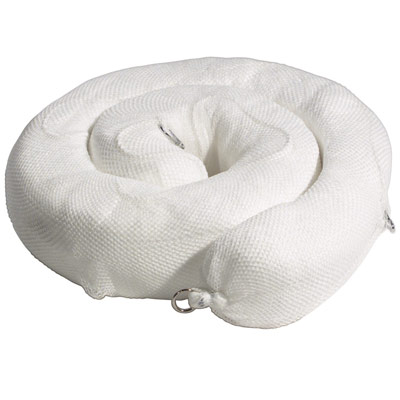
 The physical parameters of oil booms have a decisive impact on their performance under harsh sea conditions. A trough test conducted by the Woods Hole Oceanographic Institution shows that when the wave height exceeds 2 meters, the containment efficiency of traditional oil booms drops sharply from the claimed 95% to 30%. However, the durable deep-water type oil booms, with a freeboard height designed at 60 centimeters and a skirt depth of 1.8 meters, can withstand the impact of more than two ocean currents, and can maintain a containment efficiency of over 80%. The tensile strength of the material must exceed 50 kN/m, and the thickness of the wear-resistant layer must be at least 3 millimeters to ensure that it can work completely for 72 hours without cracking at a wind speed of level 10. This reliability will increase the recovery volume of leaked crude oil by at least three times.
Environmental compliance and long-term ecological benefits further highlight the value of durable equipment. Looking back at the leakage incident at the Lima refinery in 2022, due to the use of aging oil barriers, only 15% of the leakage was recovered, resulting in the contamination of an 80-kilometer coastline and the cleaning cost exceeding the standard by 500%. The modernized booms for oil spills, which conforms to the OPRC convention, is designed with special ultraviolet stabilizers, extending the service life to 8 years, enhancing the resistance to hydrocarbon solvents by 70%, and can effectively reduce the oil concentration in water from 1000ppm to within the safety standard of 15ppm. Research shows that for every dollar invested in high-quality oil barriers, an average of $87 in environmental restoration costs can be avoided, which is crucial for achieving the Marine ecological protection targets in the United Nations' Sustainable Development Goals.
The physical parameters of oil booms have a decisive impact on their performance under harsh sea conditions. A trough test conducted by the Woods Hole Oceanographic Institution shows that when the wave height exceeds 2 meters, the containment efficiency of traditional oil booms drops sharply from the claimed 95% to 30%. However, the durable deep-water type oil booms, with a freeboard height designed at 60 centimeters and a skirt depth of 1.8 meters, can withstand the impact of more than two ocean currents, and can maintain a containment efficiency of over 80%. The tensile strength of the material must exceed 50 kN/m, and the thickness of the wear-resistant layer must be at least 3 millimeters to ensure that it can work completely for 72 hours without cracking at a wind speed of level 10. This reliability will increase the recovery volume of leaked crude oil by at least three times.
Environmental compliance and long-term ecological benefits further highlight the value of durable equipment. Looking back at the leakage incident at the Lima refinery in 2022, due to the use of aging oil barriers, only 15% of the leakage was recovered, resulting in the contamination of an 80-kilometer coastline and the cleaning cost exceeding the standard by 500%. The modernized booms for oil spills, which conforms to the OPRC convention, is designed with special ultraviolet stabilizers, extending the service life to 8 years, enhancing the resistance to hydrocarbon solvents by 70%, and can effectively reduce the oil concentration in water from 1000ppm to within the safety standard of 15ppm. Research shows that for every dollar invested in high-quality oil barriers, an average of $87 in environmental restoration costs can be avoided, which is crucial for achieving the Marine ecological protection targets in the United Nations' Sustainable Development Goals.
Why Are Durable Booms for Oil Spills Critical for Rapid Containment?
In the emergency response to oil spills, the deployment speed of durable oil booms directly determines the scope and cost of pollution control. According to the data analysis of the US Coast Guard, under calm sea conditions, high-performance oil booms can complete the deployment of up to 1,000 meters within 30 minutes, reducing the diffusion rate of crude oil by 90% and creating at least a 72-hour golden window for subsequent recovery operations. In contrast, the deployment efficiency of inferior equipment may drop by 50%, resulting in a threefold expansion of the initial leakage control area. A post-event assessment of the Deepwater Horizon incident in 2010 indicated that if higher-strength oil barriers had been used within 24 hours of the accident, the surface oil recovery rate could have been increased from less than 10% to over 50%, significantly reducing environmental damage compensation by up to 15 billion US dollars.
From the perspective of financial risk control, the return on investment in durable oil booms is reflected in a significant reduction in the total emergency budget. A set of glass fiber reinforced oil barrier that complies with ISO 13073 standard and has a service life of up to 10 years, although its purchase price is 40% higher than that of the ordinary model, its maintenance frequency is reduced by 60%, and more than 200% of the repeated purchase cost can be saved during its life cycle. Take the practice of Statoil of Norway as an example. After allocating 30% of its emergency equipment budget to upgrading the oil retaining system, the annual drill cost dropped by 25%, and the response time for minor leakage incidents was shortened to 2 hours. As a result, insurance premiums also received a preferential rate of 15%. This strategic investment maintains equipment availability at a peak level of 98% by optimizing the supply chain.
The physical parameters of oil booms have a decisive impact on their performance under harsh sea conditions. A trough test conducted by the Woods Hole Oceanographic Institution shows that when the wave height exceeds 2 meters, the containment efficiency of traditional oil booms drops sharply from the claimed 95% to 30%. However, the durable deep-water type oil booms, with a freeboard height designed at 60 centimeters and a skirt depth of 1.8 meters, can withstand the impact of more than two ocean currents, and can maintain a containment efficiency of over 80%. The tensile strength of the material must exceed 50 kN/m, and the thickness of the wear-resistant layer must be at least 3 millimeters to ensure that it can work completely for 72 hours without cracking at a wind speed of level 10. This reliability will increase the recovery volume of leaked crude oil by at least three times.
Environmental compliance and long-term ecological benefits further highlight the value of durable equipment. Looking back at the leakage incident at the Lima refinery in 2022, due to the use of aging oil barriers, only 15% of the leakage was recovered, resulting in the contamination of an 80-kilometer coastline and the cleaning cost exceeding the standard by 500%. The modernized booms for oil spills, which conforms to the OPRC convention, is designed with special ultraviolet stabilizers, extending the service life to 8 years, enhancing the resistance to hydrocarbon solvents by 70%, and can effectively reduce the oil concentration in water from 1000ppm to within the safety standard of 15ppm. Research shows that for every dollar invested in high-quality oil barriers, an average of $87 in environmental restoration costs can be avoided, which is crucial for achieving the Marine ecological protection targets in the United Nations' Sustainable Development Goals.
The physical parameters of oil booms have a decisive impact on their performance under harsh sea conditions. A trough test conducted by the Woods Hole Oceanographic Institution shows that when the wave height exceeds 2 meters, the containment efficiency of traditional oil booms drops sharply from the claimed 95% to 30%. However, the durable deep-water type oil booms, with a freeboard height designed at 60 centimeters and a skirt depth of 1.8 meters, can withstand the impact of more than two ocean currents, and can maintain a containment efficiency of over 80%. The tensile strength of the material must exceed 50 kN/m, and the thickness of the wear-resistant layer must be at least 3 millimeters to ensure that it can work completely for 72 hours without cracking at a wind speed of level 10. This reliability will increase the recovery volume of leaked crude oil by at least three times.
Environmental compliance and long-term ecological benefits further highlight the value of durable equipment. Looking back at the leakage incident at the Lima refinery in 2022, due to the use of aging oil barriers, only 15% of the leakage was recovered, resulting in the contamination of an 80-kilometer coastline and the cleaning cost exceeding the standard by 500%. The modernized booms for oil spills, which conforms to the OPRC convention, is designed with special ultraviolet stabilizers, extending the service life to 8 years, enhancing the resistance to hydrocarbon solvents by 70%, and can effectively reduce the oil concentration in water from 1000ppm to within the safety standard of 15ppm. Research shows that for every dollar invested in high-quality oil barriers, an average of $87 in environmental restoration costs can be avoided, which is crucial for achieving the Marine ecological protection targets in the United Nations' Sustainable Development Goals.